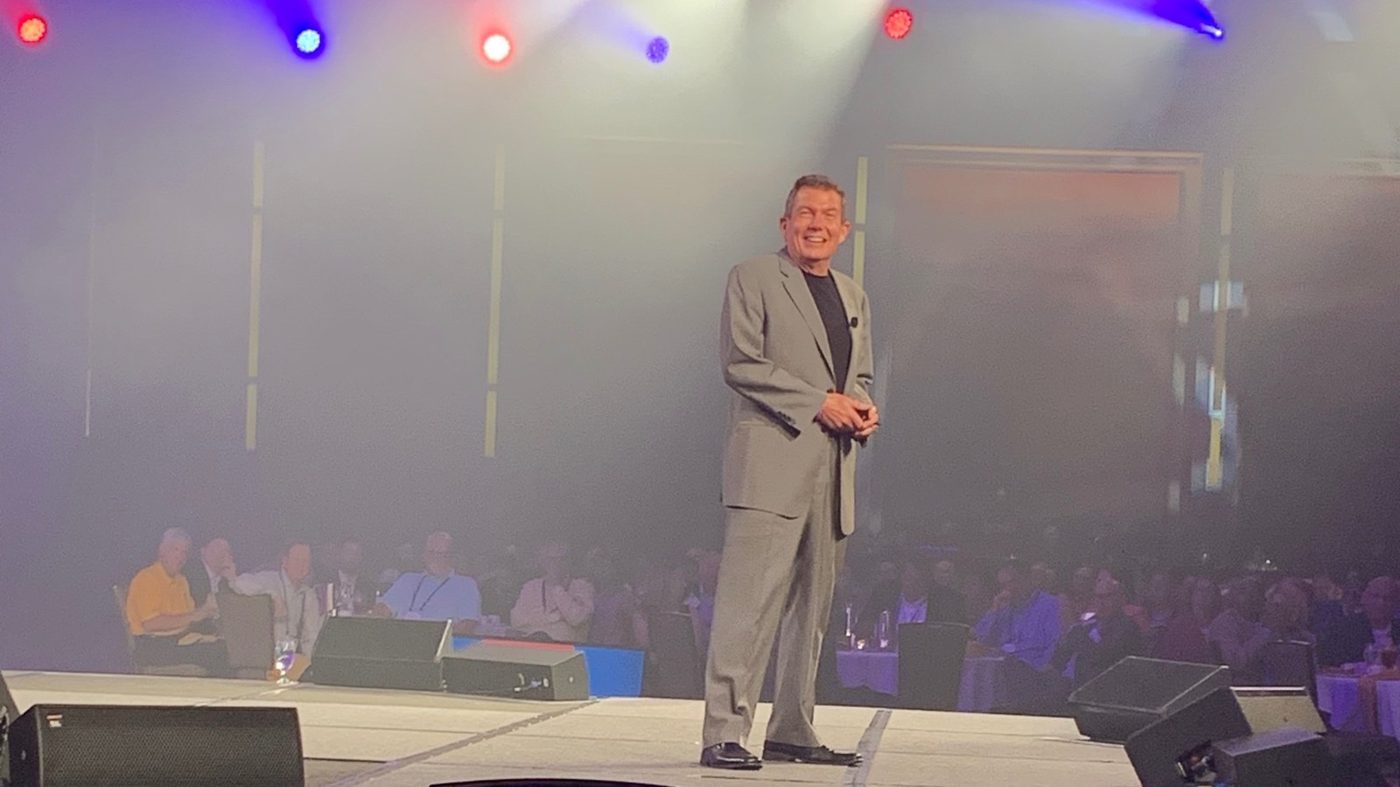
He Led The North Face for 20+ Years. His Next Company's Bank Balance: $46
Hap Klopp, who led The North Face as President & CEO, raised $700,000 in two weeks to save a startup. By the next morning, it was gone.
By Terry L. Fossum, keynote speaker and #1 Wall Street Journal bestselling author ·
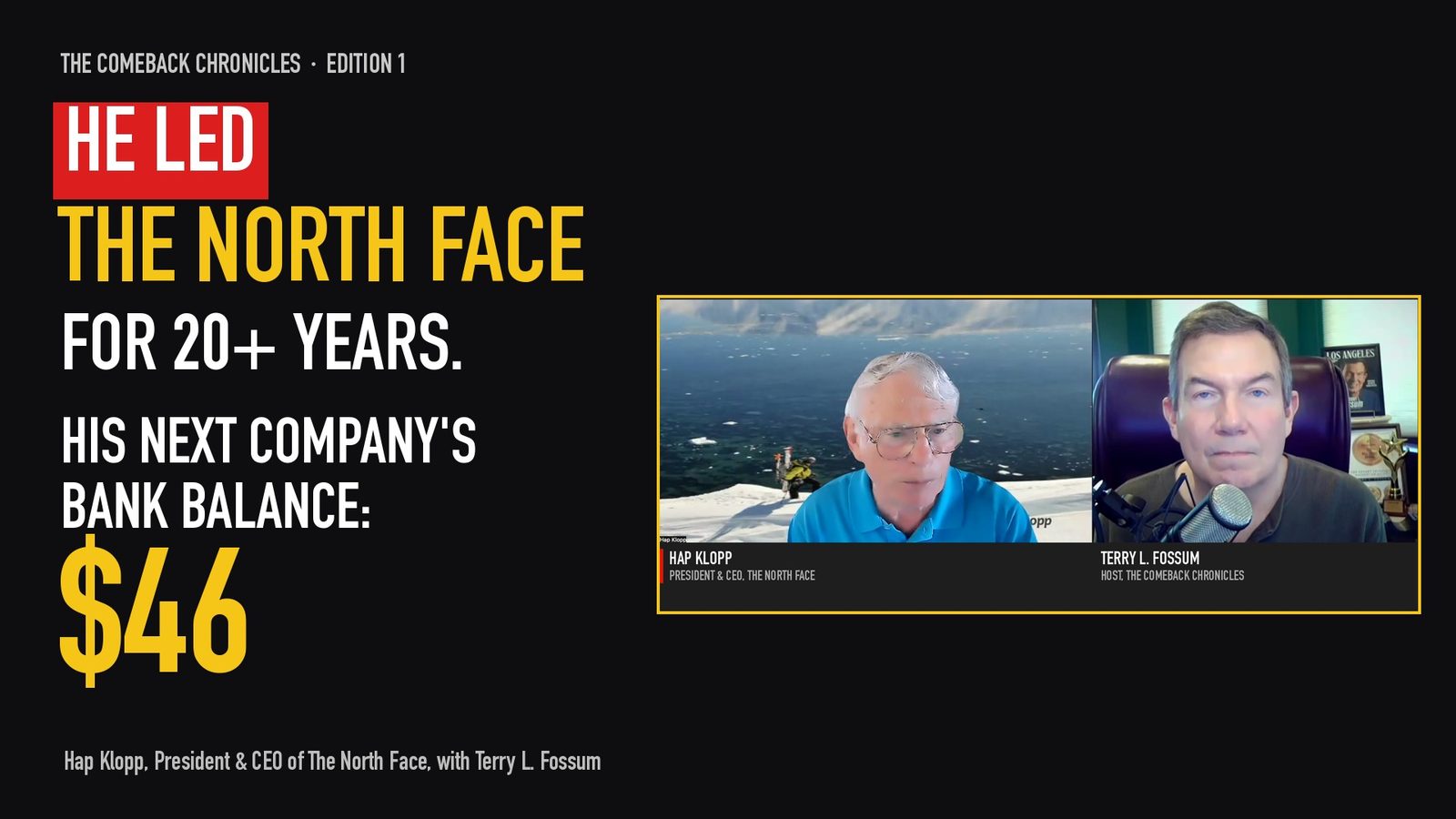
Thursday morning. Hap Klopp sits down at the computer and pulls up the company's bank balance.
Forty-six dollars.
The day before, $700,000 had landed in that account. Hap raised it himself in two weeks, from people who trusted him. Payroll was due the next day.
He went to the CFO and asked what happened. The CFO told him, "the CEO said I had to spend it."
Hap's answer: "the CEO is part of the plan."
The man who led The North Face
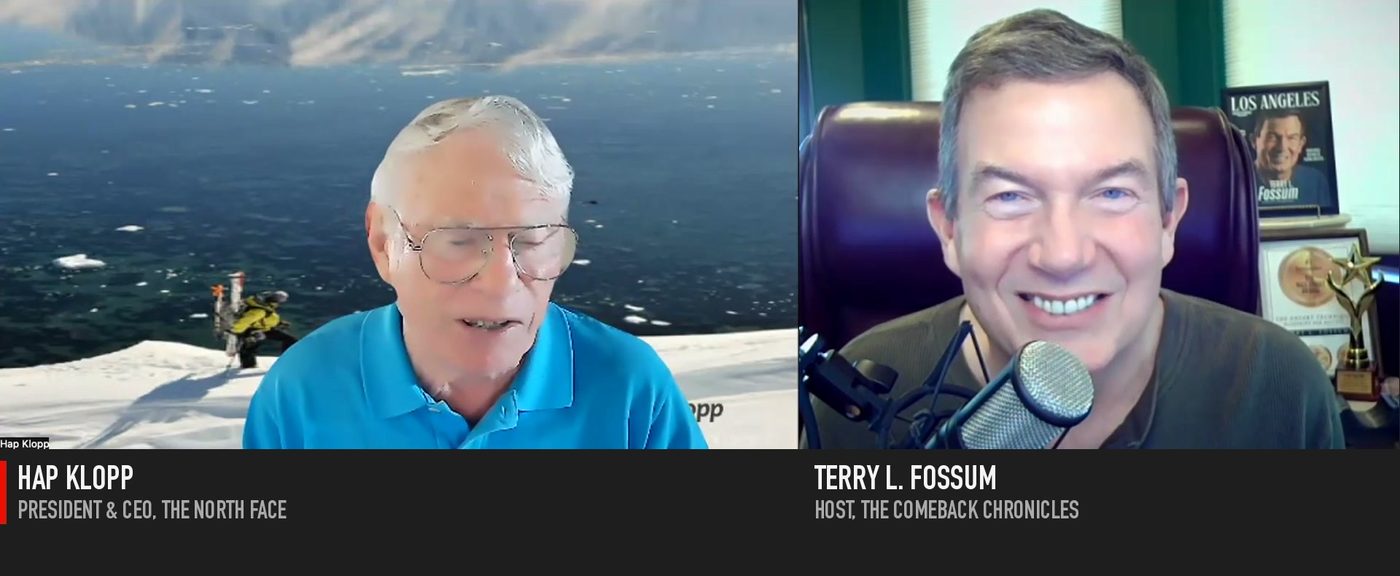
For my podcast, The Comeback Chronicles, I sit down with leaders behind NASA, Tesla, The North Face, E!, and FANUC. Hap Klopp led The North Face as President and CEO for more than 20 years. They started with 14 people. Today it's a $4 billion company owned by VF Corporation.
I spend a lot of time in some of the harshest environments on earth, so Hap has a lot of my money. I also work with the scouting program a lot, and I can get kids out into the wilderness as long as they're comfortable. That comes down to good gear.
"Like a drunken sailor"
After he sold The North Face, Hap took a full-time advisory role with a Silicon Valley company that made portable power systems. Lithium-ion battery packs now, fuel cell patents for later. Some of the best engineers from Stanford, Cal and Vanderbilt. The CEO was a Navy admiral.
Everybody was thinking unicorn. Hap told them, "before you're a unicorn, you actually got to do something." So they started with the battery. The sales team he brought in did $12 million the first year and $25 million the second. Not a unicorn, but real.
Then Apple came to visit. The CEO decided they'd sell by the end of the year for $50 to $100 million, and he started spending. In Hap's words, "like a drunken sailor, which, you know, because he was an admiral, he could be." Pretty soon they owed $2 million, had no money in the bank, and the landlord was threatening to close them down.
Everybody sat down together and agreed that $147,000 would keep people happy until they could sell or do a proper fundraise. Hap went out and raised $700,000. It came in Wednesday. By Thursday morning the account held $46.
It got worse. The CFO said he'd left $80,000 in for payroll. Hap went to the bank and found three checks adding up to about $80,000 that weren't in the check register. They had been written two weeks earlier, before he raised a dime.
"And I used all my credibility on your behalf."
Hap had to leave. The company bobbled along for a while and eventually folded. He summed up the fallout in one line: "my mailing list got a lot shorter."
"Being stabbed in the back is one thing. You know, I'm big. Okay, I can do that. But being stabbed in the back when, in fact, it hurt some of the people in the company, people I brought in to do that, that hurt a lot."— Hap Klopp
How he came back
I asked Hap the question every leader in that spot needs answered: how did you come back from it, and how did you help your people come back?
His first step: "I went and had a beer. Let's call it like it is."
Then came the step that's easy to skip. He brought his people together and told them, "this one went down, but this is not unusual." If they learned from it, he said, they could take that to their next employer and "people will like it." He was right. Some of them are working at Apple now. A couple are teaching. A couple are at Facebook.

I know this one personally. I went from failing, and failing, and failing for years in business to the fraction of 1% in my entire industry. In the world.
Along the way, I'd built a business that paid more than I was making as an Air Force officer. Then, literally overnight, I lost three-fourths of my distribution channels, and three-fourths of my income went with them. I wanted to quit. I got up one more time.
Hap once asked a partner at Sequoia, the venture capital firm, what he thought about failure. The answer: "love it."
"We probably wouldn't invest in a firm unless some of the people in the management had some failure. Because you learn more from failure than you do from success."— a Sequoia partner, as Hap tells it
When you succeed, Hap says, you credit genius and hard work and a little luck. "When you fail, you can't sleep. You're thinking, well, how could I have done it differently? What did I do wrong? All of that is a learning."
The lessons he pulled out of that company were plain ones: have a team, keep cash in the bank, and have a plan B for when plan A doesn't work. In his words, "never have I seen the business actually play out like the original business plan." We say the same thing in the military: all strategies are great till the first bullet flies.
What I took from Hap
Conversations like this one are the raw material for my keynote, Throw Away the Box. Hap's line about business plans is the whole idea.
When the plan breaks, it's tempting to defend it. The ones who come back rebuild from scratch. They stop asking how to save the old box and start asking what they'd build if they were starting today.
What this looks like Monday morning
Pick the last thing that went sideways on you. The deal you lost. The event that came apart the week before it happened. The hire that didn't work out. Here's how I'd put Hap's comeback to work.
- Give it one night. Hap went and had a beer. Feel it. Just don't make big decisions while it still stings.
- Write the lesson in one sentence. In daylight, not at two in the morning, answer Hap's question on paper: how could I have done it differently?
- Gather your people and say it out loud. "This one went down. Here's what we learned." Hap's people got hired because they could explain what they'd learned. Yours can too.
- Check who's really in your plan. Is there a plan B? Is everybody who controls the money actually part of the plan? Hap learned that one at $46.
What's the best lesson a failure ever taught you? One line is plenty. Tell me in the comments.
Know a leader who has lived through their own $46 morning? Send them this. They'll know exactly what Hap meant.
P.S. Next edition: Larry Kasanoff, producer of Terminator 2, on what to do when everyone is beating you up. His answer: "When you're in trouble like that, go bigger." Subscribe so it lands in your inbox.
Watch the full conversation: The Man Who Led The North Face Raised $700K. Next Morning: $46